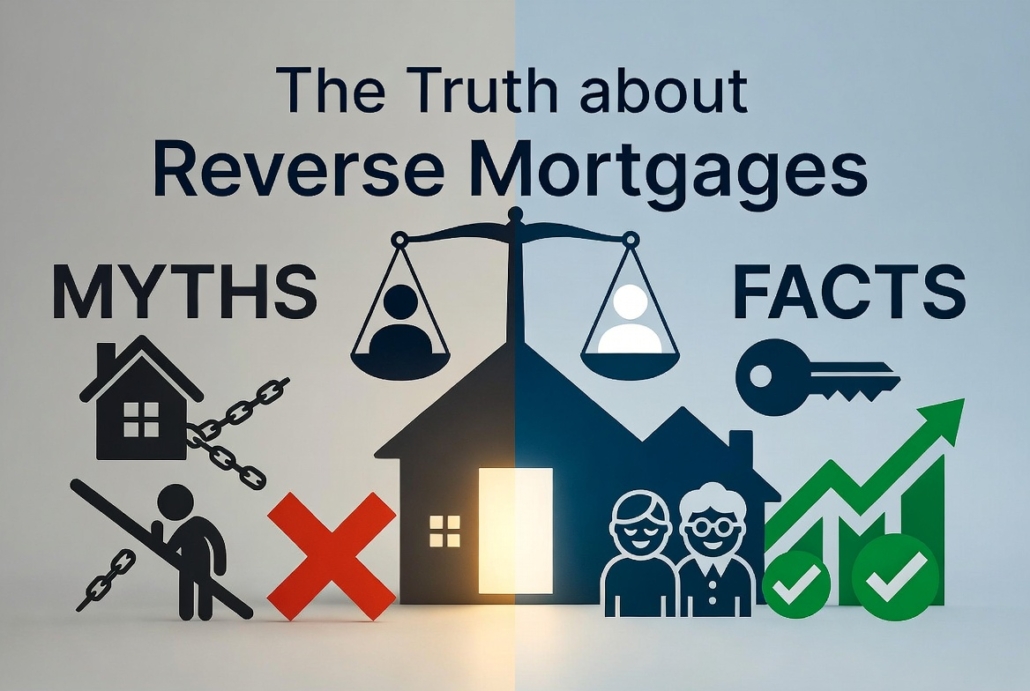
“The Truth about Reverse Mortgages – Myths vs Facts”
Common Reverse Mortgage Myths vs. Facts
Federally insured reverse mortgages (HECMs) have grown in popularity among seniors looking to access home equity. Unfortunately, this popularity has also led to widespread misinformation. Below we clear up the most common reverse mortgage misconceptions with clear, factual answers.
Myth 1: A reverse mortgage works just like a traditional home loan
Fact: A federally insured reverse mortgage is a specialized loan designed for homeowners age 62 and older. It allows you to convert a portion of your home equity into cash. Unlike a traditional mortgage or home equity loan, you are not required to make monthly principal and interest payments. The loan typically becomes due only when the last borrower permanently leaves the home, sells the property, or fails to meet the loan obligations (such as paying property taxes and homeowners insurance).
Myth 2: Most people use reverse mortgage money for vacations and luxuries
Fact: The majority of reverse mortgage borrowers use the funds for essential needs — paying off an existing mortgage, covering medical expenses, home repairs, or supplementing retirement income so they can remain in their home longer. Only a smaller percentage use the money primarily for discretionary spending.
Myth 3: Federally insured reverse mortgages are too expensive
Fact: Like any mortgage, reverse mortgages have costs (origination fees, closing costs, and FHA mortgage insurance). However, most of these costs can be financed into the loan. The FHA mortgage insurance premium protects both the borrower and the lender. It guarantees that you will receive the loan proceeds you were promised and that neither you nor your heirs will ever owe more than the value of the home (non-recourse protection). There is also a lower-cost option called the HECM Saver that reduces the upfront mortgage insurance premium in exchange for a smaller available loan amount.
Myth 4: Only elderly widows get reverse mortgages
Fact: While early HECM borrowers were often older single women, today’s borrowers include couples and younger seniors (including many baby boomers). Many use reverse mortgages to eliminate existing mortgage payments, manage debt, or create a financial cushion while aging in place.
Myth 5: A reverse mortgage should only be used as a last resort
Fact: A reverse mortgage works best as part of a thoughtful long-term financial plan — not as an emergency solution during a crisis. Waiting until finances are severely strained often reduces available options. HUD-approved counseling can also help identify other public and private benefits that may supplement or serve as alternatives to a reverse mortgage.
Myth 6: A fixed-rate reverse mortgage is always the better choice
Fact: Fixed-rate reverse mortgages usually require taking all available funds as a lump sum at closing. This means interest begins accruing on the entire amount immediately and can deplete home equity faster. An adjustable-rate reverse mortgage often allows a line of credit that grows over time and only charges interest on the amount you actually use — offering greater flexibility for many borrowers.
Myth 7: Reverse mortgage counseling is a waste of time
Fact: Federal law requires every borrower considering a HECM to complete counseling with a HUD-approved agency. A trained counselor reviews the costs, features, risks, and alternatives specific to your situation. Counseling helps ensure you fully understand the long-term implications before making a decision.
Myth 8: Most reverse mortgage foreclosures happen because borrowers were scammed
Fact: Foreclosure on a reverse mortgage most often occurs when the borrower fails to pay property taxes, homeowners insurance, or maintain the home. Taking a large lump sum and spending it too quickly can also create problems later. This is one of the reasons HUD-required counseling is so important — it helps borrowers understand their ongoing responsibilities and avoid common pitfalls.



